
Roof Cleaning and Soft Wash in Baltimore, MD
RBJ Exterior Solutions removes black streaks, moss, and algae from asphalt shingles using low-pressure soft washing that follows manufacturer guidelines and protects your roof's warranty. Serving Baltimore, Towson, Dundalk, and 17 more communities across Baltimore County.
- Licensed & insured
- Soft wash + pressure wash
- Free estimates
What Is Roof Soft Washing and What Does It Actually Do?
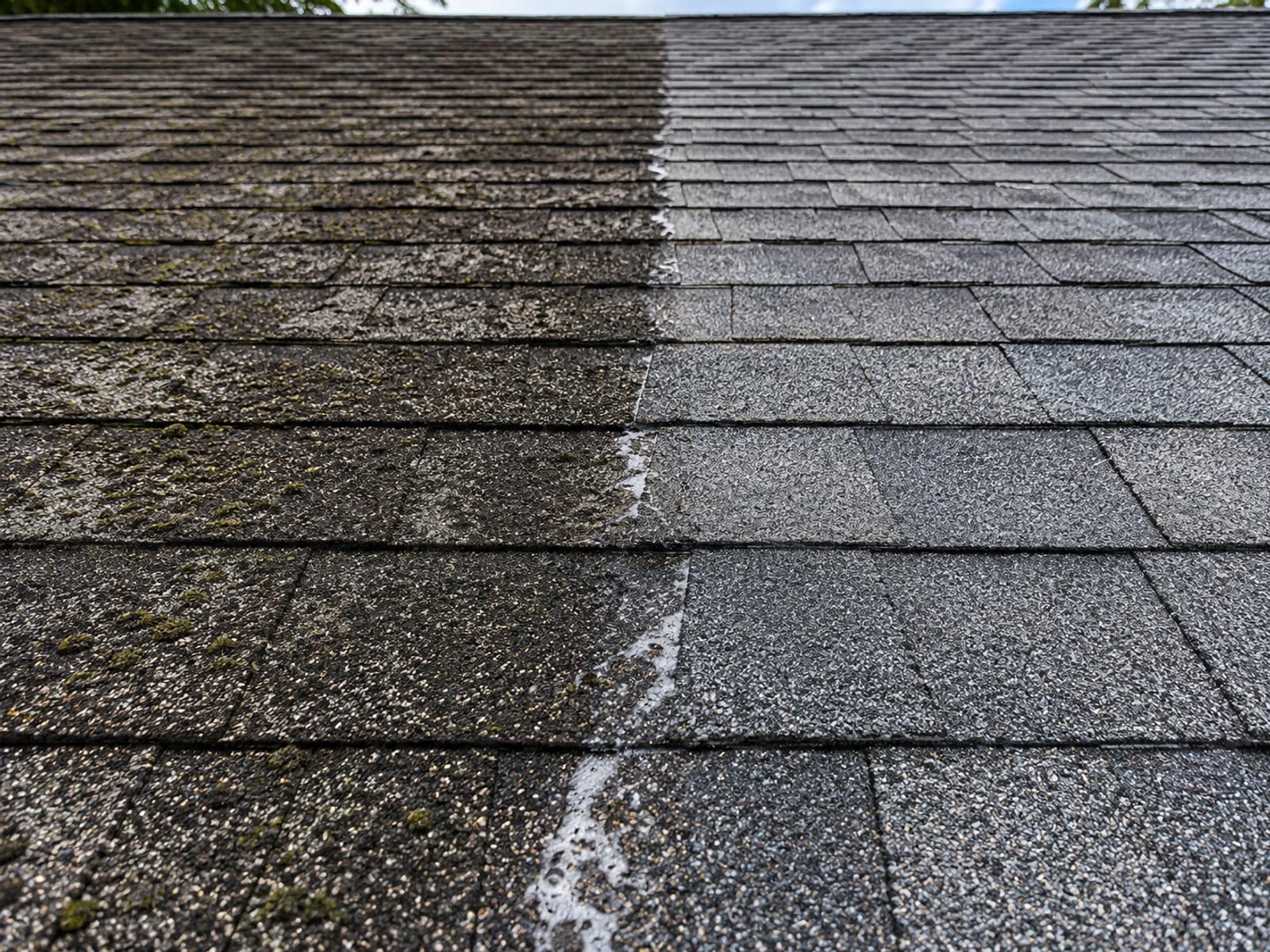
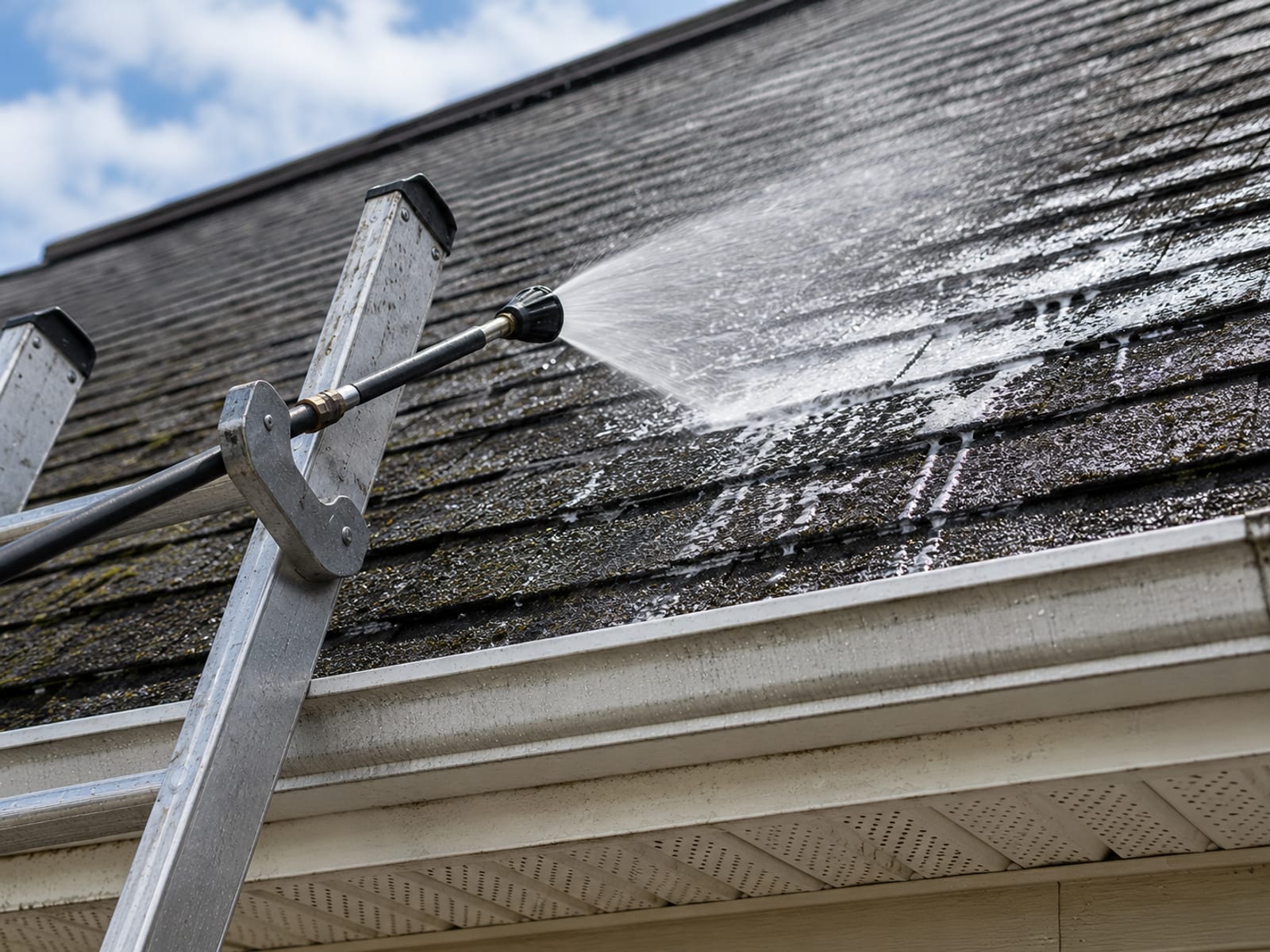
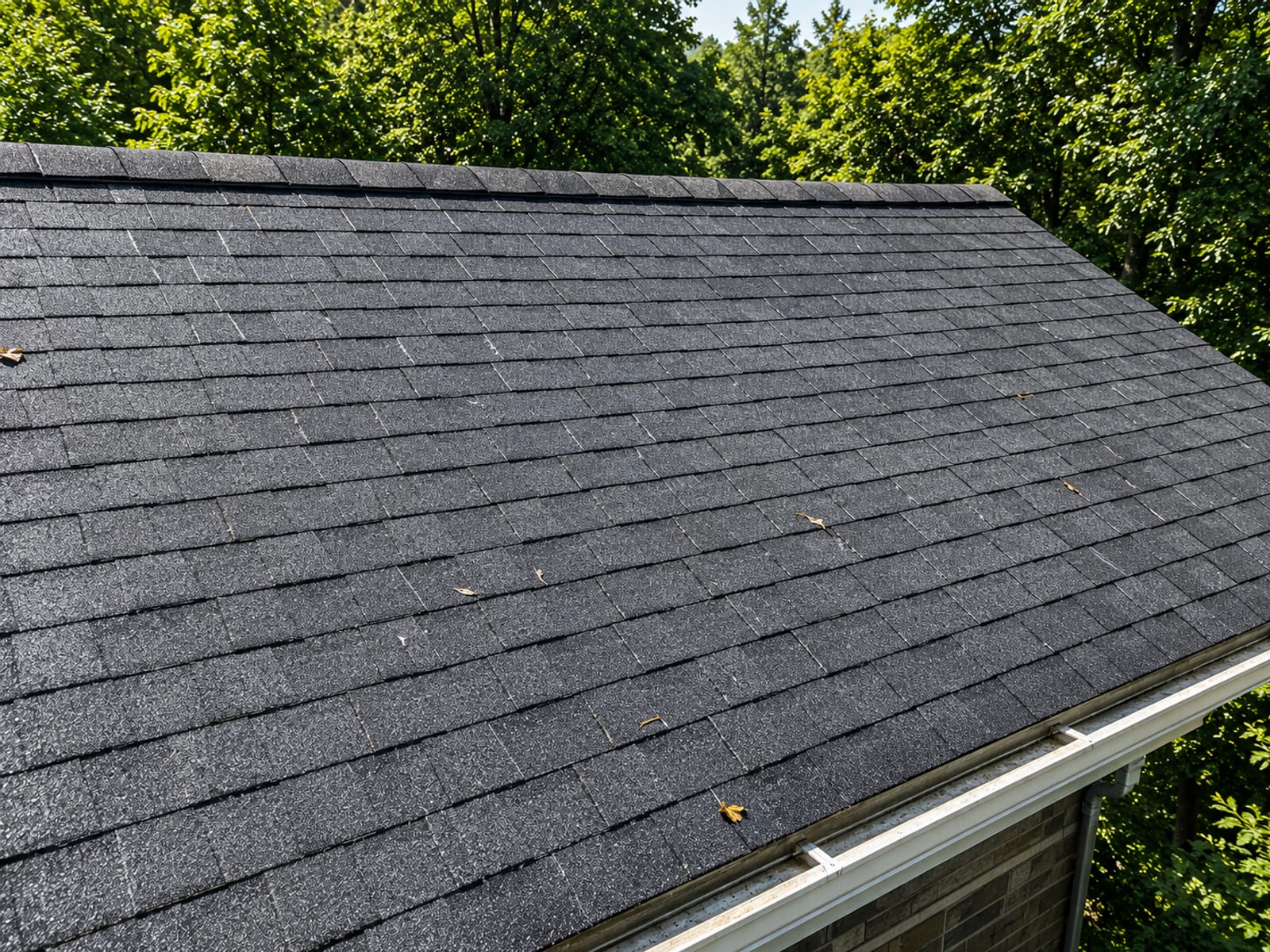
Roof soft washing is a low-pressure cleaning method that applies biodegradable cleaning solution directly to your roof surface to kill and remove algae, moss, lichen, and the black streaks running down asphalt shingles. RBJ Exterior Solutions uses this method because industry best practices specifically advise against pressure washing shingles. High pressure strips granules, forces water under shingles, and can void manufacturer warranties. Soft washing cleans the roof without any of that risk, and results are visible after a single treatment.
What you get at the end of the job is a roof that looks noticeably cleaner, with biological growth killed at the source rather than just rinsed off the surface. That distinction matters because algae and moss treated with the right cleaning agents do not return as quickly as growth that was only physically scraped or rinsed. Most asphalt shingle roofs in the Baltimore area collect algae staining within a few years of installation, and soft washing addresses that growth without shortening the life of the shingles themselves.
Why Baltimore Roofs Collect Algae and Streaks Faster Than You'd Expect
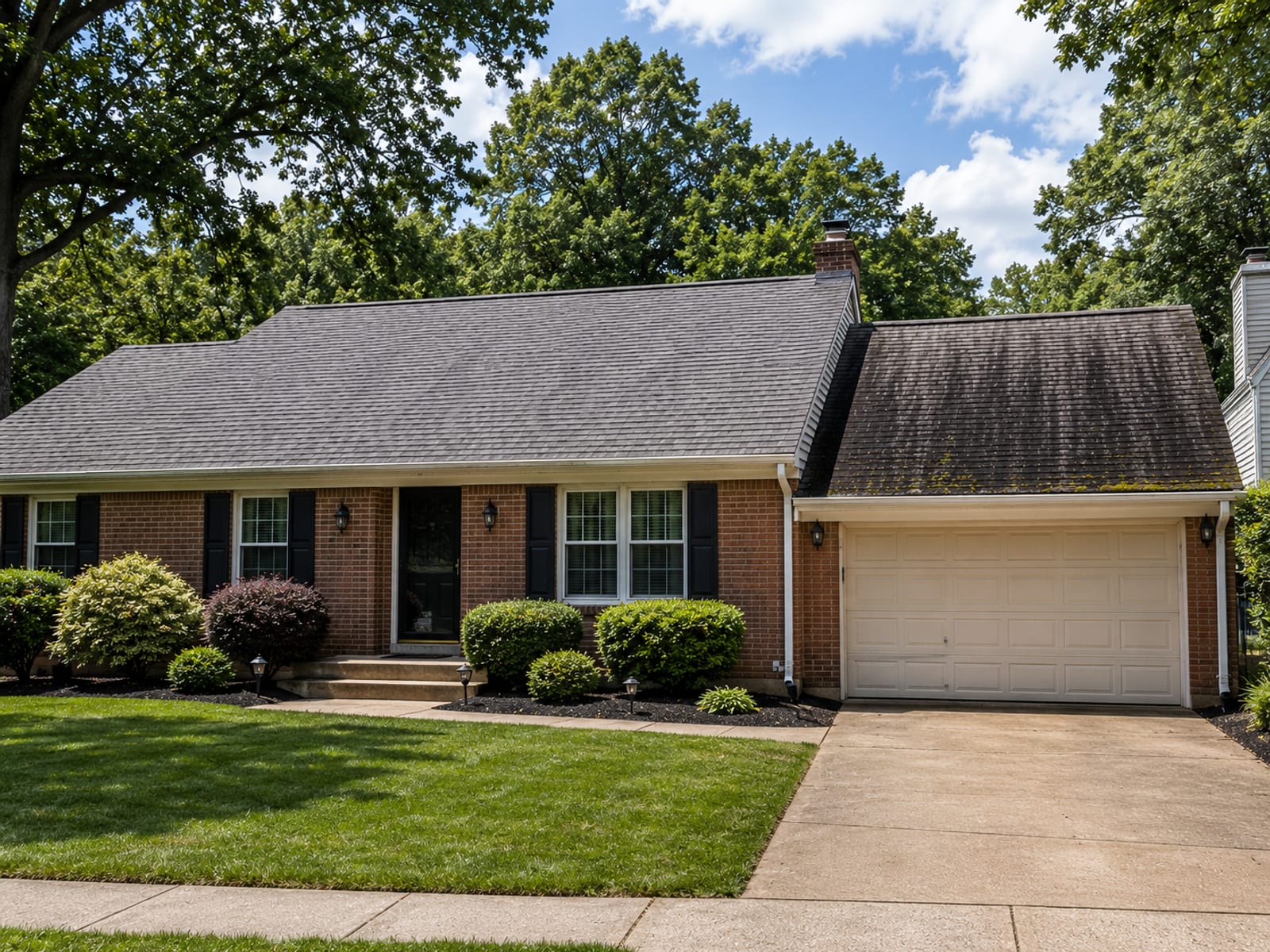
Maryland's mid-Atlantic climate creates ideal conditions for roof algae. The humidity that builds through late spring, summer, and into fall, combined with the tree canopy shading large sections of rooflines across Baltimore County neighborhoods, keeps roof surfaces damp for long stretches. That moisture is exactly what Gloeocapsa magma, the algae responsible for dark streaks on shingles, needs to spread and feed.
The black streaks are not just a cosmetic issue. Algae feeds on the limestone filler used in asphalt shingles, meaning active growth is slowly degrading the shingle material itself. Moss and lichen create additional problems because they hold moisture against the roof surface and can lift shingle edges as they grow into the granule layer. Letting this growth go untreated for multiple seasons accelerates shingle wear in ways that eventually show up as leaks or premature replacement costs.
If your home is in Cockeysville, Lutherville-Timonium, Perry Hall, White Marsh, or any of the tree-heavy neighborhoods across Baltimore County, your roof is dealing with more shade and moisture exposure than homeowners in drier climates face. That is the honest reason why roof cleaning is a realistic part of home maintenance in this region, not something reserved for neglected properties.
Will Soft Washing Damage My Shingles or Void My Warranty?
The answer depends entirely on the method used. High-pressure washing can damage asphalt shingles, which is why industry best practices advise homeowners against it. Soft washing uses low pressure that will not strip granules or force water up and under shingles. When done correctly, it is consistent with the manufacturer-safe cleaning methods that keep your shingle warranty intact.
RBJ Exterior Solutions applies cleaning solution at low pressure, allows it to work on the biological growth, and rinses without the force that causes shingle damage. The cleaning agents used are biodegradable, which matters both for your landscaping and for runoff awareness in a state that takes Chesapeake Bay watershed protection seriously. Before any cleaning starts, surrounding plants get wet down as a precaution, and the crew manages where runoff goes.
If you have been putting off roof cleaning because you were not sure whether it would hold up against a future warranty claim, soft washing is the method that removes that concern. The cleaning method matters more than whether you clean the roof at all.
What the Roof Cleaning Process Looks Like, Start to Finish
RBJ Exterior Solutions follows a consistent process on every roof cleaning job. Knowing what happens at each stage helps you prepare your property and know what to expect on the day of service.
Pre-Job Inspection
Before any cleaning begins, the crew checks your roof type, shingle age, slope, access points, gutters, downspouts, and any visible damage. This step determines what the job requires and whether anything on your property needs to be moved or protected. You will know the full scope before work starts.
Landscaping and Surface Protection
Plants, shrubs, and garden beds near the roofline get wet down before any cleaning solution goes on the roof. This pre-wetting step is a standard precaution because even biodegradable cleaning agents can stress plant tissue if they pool undiluted in a garden bed. Downspouts and nearby paved surfaces are also accounted for during this setup step.
Low-Pressure Soft Wash Application
Cleaning solution is applied across the roof surface at low pressure using dedicated soft wash equipment, not a standard pressure washer turned down. The solution works into algae, moss, lichen, and staining at the shingle level, killing biological growth rather than just displacing it. Application is controlled to avoid overspray onto adjacent surfaces.
Dwell Time and Treatment
The cleaning agents need time to work. Rushing this stage with high pressure to speed things up is one of the ways poor-quality roof cleaning goes wrong. Allowing proper dwell time means the biological growth is actually treated, not just surface-rinsed, so results hold longer after the job is done.
Rinse and Final Check
After the treatment has done its work, the roof is rinsed at low pressure. The crew does a final walkthrough to check for areas that need additional attention, confirm that runoff was managed correctly, and verify that surrounding plants and surfaces are in good shape. Before and after photos document the work.
The Difference Between Roof Soft Washing and Pressure Washing a Roof
The two methods are not interchangeable, and the distinction is not just marketing language. Pressure washing a roof uses high-pressure water to physically blast growth and staining off the surface. It works on concrete and brick because those materials can take the force. Asphalt shingles cannot. The granule layer that gives shingles their weather-resistant properties is only loosely bonded, and high pressure knocks granules loose at a rate that shortens shingle life and can create gaps that allow moisture intrusion.
Soft washing uses chemistry to do the work that pressure washing uses force for. The cleaning solution breaks down and kills algae, moss, and lichen at the cell level. Because the cleaning is chemical rather than mechanical, the pressure only needs to be high enough to apply and rinse the solution, not high enough to scour the surface. That is a fundamentally different interaction with the shingle, and the results last longer because the biological growth is dead rather than just physically displaced.
When getting quotes on roof cleaning, this is the question worth asking every provider: what pressure are you using on the shingles? Any answer that involves a standard pressure washer at high PSI is a red flag for asphalt roofing, regardless of how experienced the crew seems.
What Makes RBJ Exterior Solutions the Right Choice for Roof Cleaning in Baltimore County
RBJ Exterior Solutions is licensed and insured, and the approach to roof cleaning is built around protecting your property, not just finishing the job quickly.
Method That Matches the Surface
Both soft washing and pressure washing equipment are part of the setup, which means the crew applies the method that fits the actual surface rather than using one approach on everything. Roofs get soft wash. Concrete driveways get appropriate pressure. The surface determines the method, not convenience.
Roof Cleaning Without Warranty Risk
The soft wash approach follows the cleaning practices that shingle manufacturers actually sanction. If you have an active roof warranty, this matters. High-pressure cleaning by an unqualified contractor is one of the most common ways homeowners unknowingly void shingle coverage before a major repair claim.
Responsible Runoff and Landscaping Practices
Maryland's Chesapeake Bay watershed rules and basic environmental responsibility mean runoff from roof cleaning needs to be managed. RBJ Exterior Solutions handles plant protection, controlled application, and rinse management as part of the standard job, not as an add-on.
Full Exterior Scope Saves You Coordination Time
Roof cleaning pairs naturally with gutter cleaning, house washing, window cleaning, and deck or patio work. If you are a property manager or a homeowner getting a full exterior refresh done before listing a home, RBJ Exterior Solutions handles every major exterior surface, which means fewer vendors to schedule and fewer separate service windows to coordinate.
Focused Local Service Area Means Faster Scheduling
The service footprint covers 20 Baltimore County communities, and that focused geography means less drive time between jobs and a crew that already understands the local tree canopy, shade patterns, and humidity conditions that drive algae and moss growth in this area.
Visible, Documented Results
Before and after photos come with every job. You can see exactly what changed, which matters if you are preparing a property for sale, building a maintenance record for an insurance claim, or simply want to confirm the work was done to scope.
How Often Should You Have Your Roof Cleaned in Maryland?
There is no universal schedule that applies to every roof in Baltimore County, because the growth rate depends on how much shade your roof gets, how old the shingles are, and which direction the most exposed sections face. A north-facing roof section sitting under a large oak canopy in Parkville will collect algae faster than a south-facing roof in a more open neighborhood in Owings Mills.
As a general reference point, many homeowners in the mid-Atlantic region find that algae staining becomes visible within two to three years on shaded sections and can be maintained with soft washing on a schedule of every one to two years depending on how quickly growth returns. That is not a figure RBJ Exterior Solutions guarantees, because every property is different, but it gives you a realistic sense of what regular maintenance looks like in this climate.
The easiest way to gauge whether your roof is due for cleaning is visual: if you can see dark streaks or green patches from the ground, especially on north-facing or shaded sections, the growth is already established enough to be causing active wear. Waiting until it is more obvious rarely saves money; it just means more growth to treat and more months of wear that already happened.
Frequently Asked Questions About Roof Cleaning and Soft Wash
Is soft washing safe for all roof types, or just asphalt shingles?
Will the cleaning chemicals hurt my plants or grass?
Do I need to be home during the roof cleaning?
How long does a typical residential roof cleaning take?
Can I just wait for rain to clean the algae off naturally?
Will roof cleaning help if I'm getting ready to sell my home?
What's the difference between moss and algae on a roof, and does it matter for treatment?
Get a Roof Cleaning Quote for Your Baltimore County Home
Call 203-751-0574 or email info@rbjexteriorsolutions.com to schedule a roof cleaning assessment. Monday through Saturday, 8:30 AM to 4:30 PM.