
Deck and Patio Cleaning in Baltimore, MD
RBJ Exterior Solutions removes mildew, tannin stains, algae, and built-up grime from wood, composite, and stone outdoor surfaces across Baltimore County. We match the right pressure and cleaning method to your specific surface so the results last and the material stays intact.
- Licensed & insured
- Soft wash + pressure wash
- Free estimates
What Does Professional Deck and Patio Cleaning Actually Include?
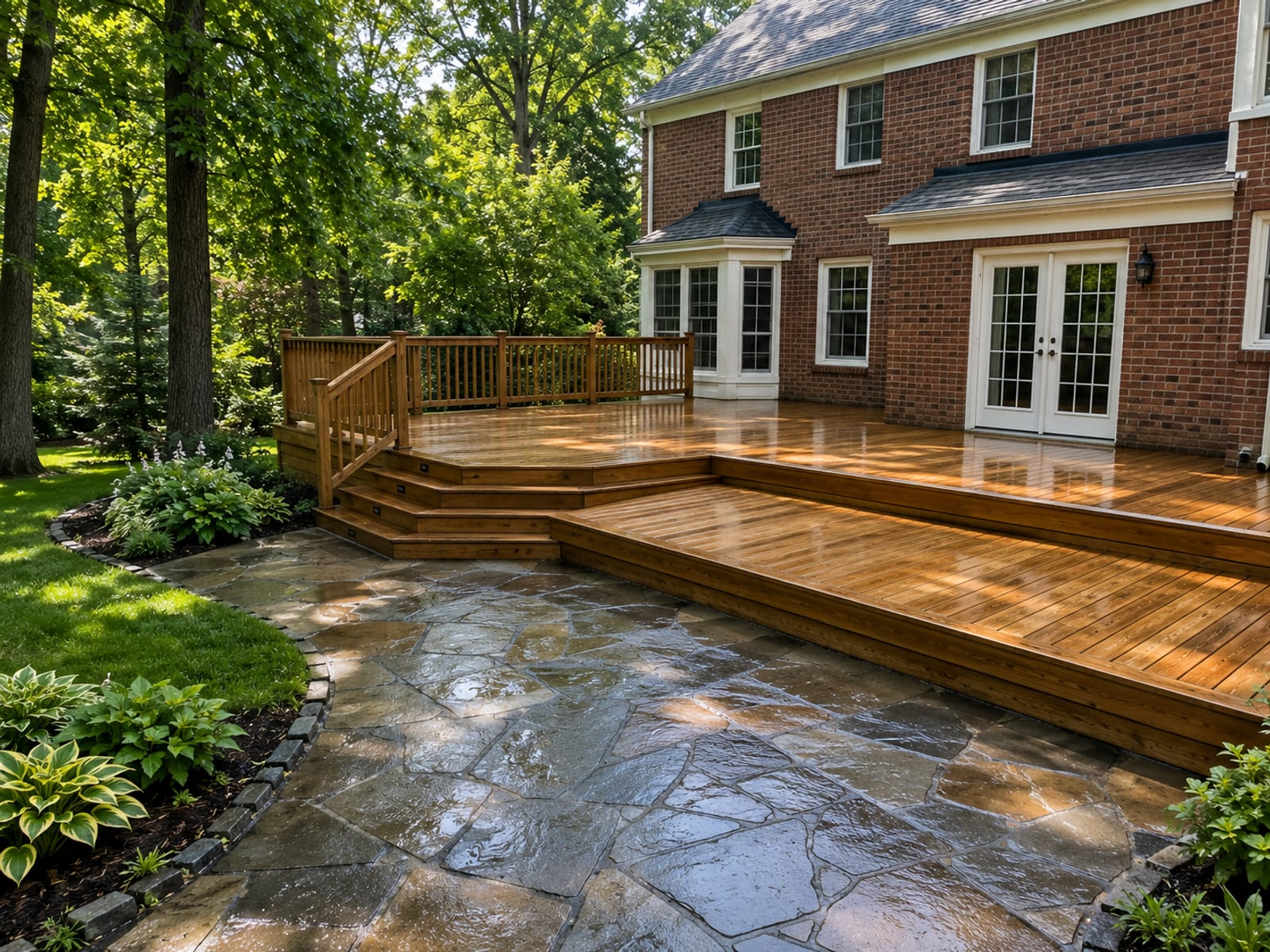
Deck and patio cleaning is a targeted exterior cleaning process that removes mildew, algae, tannin stains, pollen film, and organic buildup from outdoor living surfaces. A professional visit covers your full deck or patio area, including boards or pavers, railings, stairs, and edging detail work, and it typically takes one to three hours depending on surface size and the degree of buildup. You get a surface that is clean, structurally safer because slippery algae and organic growth are gone, and visually ready for outdoor use.
Maryland's humidity, tree canopy, and rainfall create conditions that accelerate algae and mildew growth on every exterior surface, and your deck or patio sits at the center of that problem. Shaded boards stay damp longer. Leaf tannins leave deep brown staining on wood and stone. Pollen collects in every joint and groove through spring. By the time outdoor season arrives, most decks and patios in Baltimore County have months of biological growth baked into the surface.
What makes professional cleaning different from hosing things down yourself is the combination of correct pressure, the right cleaning chemistry for your surface type, and the process discipline to rinse properly without driving contaminants into wood grain or washing cleaner into your landscaping. That combination is what produces a result that holds instead of fading back to green in a few weeks.
Why Baltimore County Decks and Patios Need Cleaning Every Season
Maryland's mid-Atlantic climate is hard on outdoor surfaces. The combination of warm summers, heavy spring rain, tree cover, and high ambient humidity keeps exterior wood and stone surfaces in near-constant contact with moisture for much of the year. That moisture drives algae colonization, mildew growth, and the slick green film that makes a deck surface a slip hazard by midsummer.
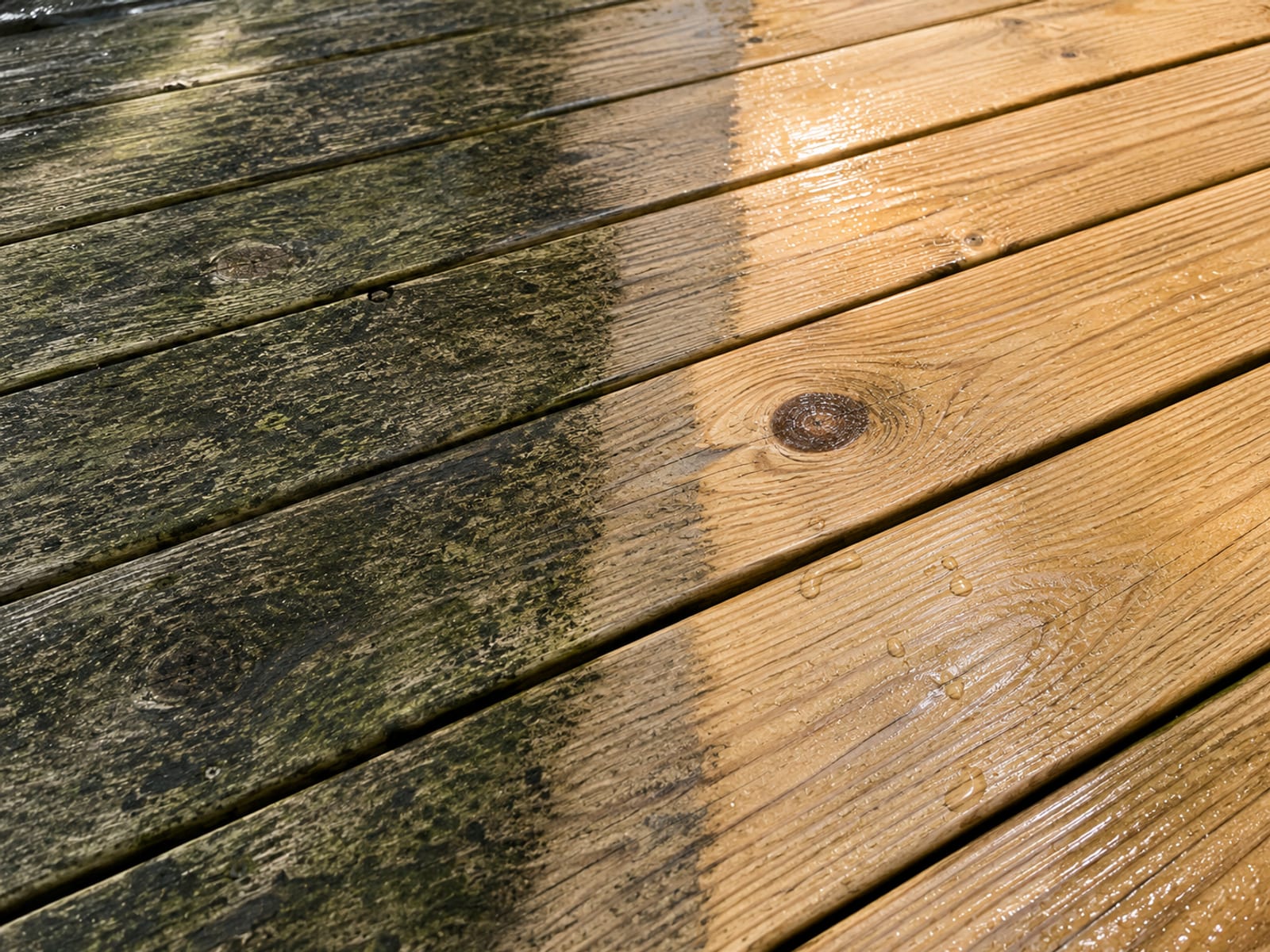
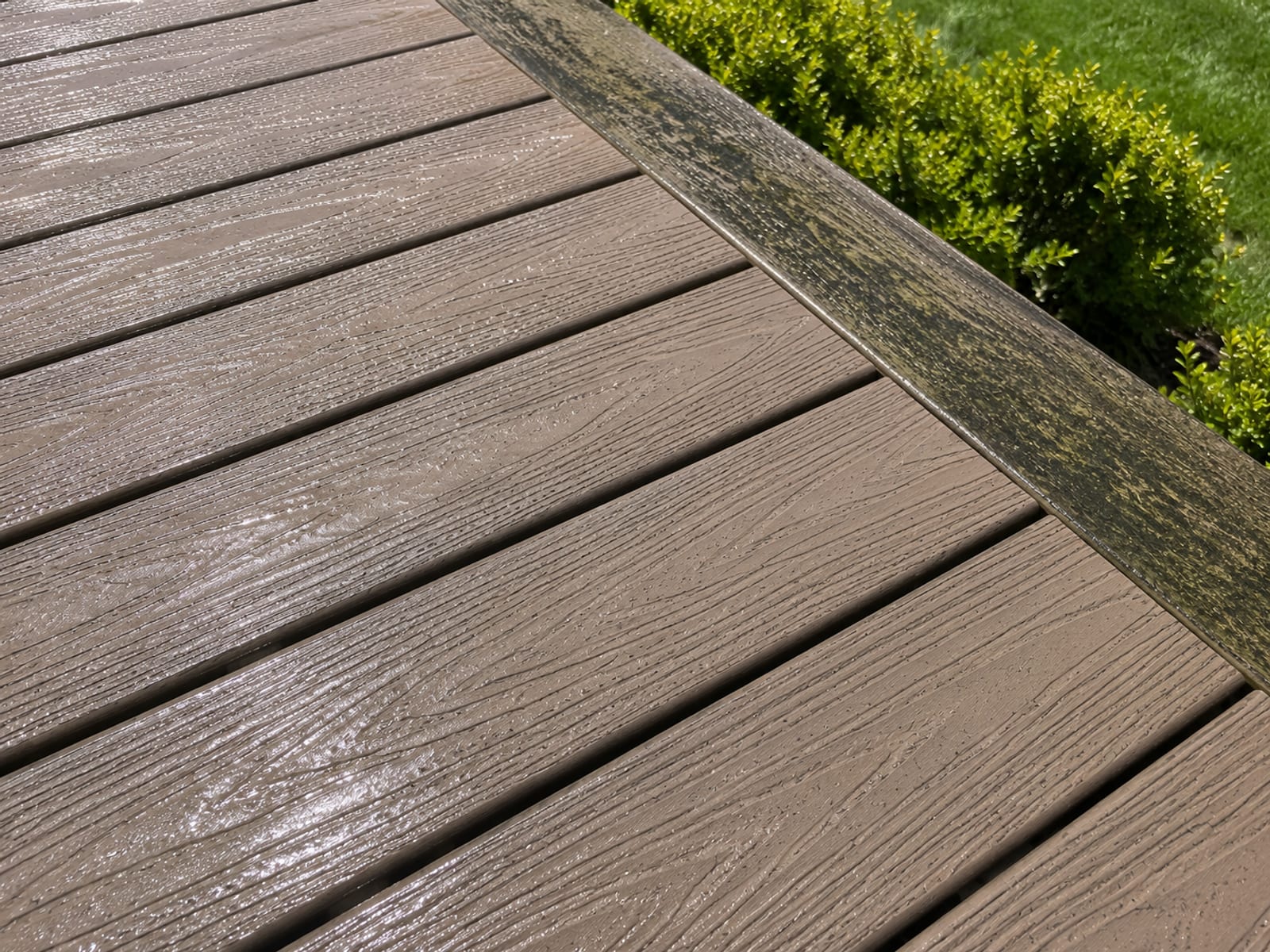
Wood decks face an additional challenge. Tannins leach out of wood naturally over time, especially after rain, and they leave behind dark brown or black staining that can look like rot even on a structurally sound board. Composite decking, which many homeowners assume requires no maintenance, still collects pollen, algae, and organic debris in its surface texture and joints. Left long enough, that buildup becomes a surface discoloration problem and a grip issue underfoot.
Stone and paver patios develop their own specific problems. Joint sand erodes slightly over seasons, algae sets into low spots and shaded areas, and efflorescence can leave white mineral deposits on the surface. Natural bluestone and flagstone become slippery surprisingly fast under even light algae growth, which creates a real safety concern for children and older adults using the space.
Beyond safety and appearance, there is a maintenance cost argument. Algae and mildew that sit on wood long enough begin to break down the surface fibers, accelerating weathering, causing premature graying, and in some cases contributing to soft spots and rot if moisture is consistently trapped under biological growth. Cleaning before and after the outdoor season is one of the most direct ways to extend the service life of a wood deck.
How We Clean Decks and Patios Without Damaging the Surface
Every deck and patio cleaning job starts with a surface assessment, not a pressure washer. The material, age, condition, existing coatings, drainage path, and type of growth or staining all affect how we approach the job. What works on a poured concrete patio will damage the fibers of a soft wood deck, and what removes algae from pavers may need to be applied differently on bluestone. Getting that assessment right is what separates a clean result from a damaged one.
Surface Assessment
We identify the deck or patio material, check the surface condition, look at drainage and runoff paths, and note any areas that need extra care, such as soft boards, lifted pavers, sealed sections, or nearby planted beds. This step determines which equipment, pressure setting, and cleaning solution goes on your specific surface.
Furniture and Plant Protection
Movable furniture and decor come off the work area where practical. Plants and landscaping adjacent to the patio get pre-wetted before any cleaning chemistry is applied, which reduces the risk of product contact with root zones and foliage. Runoff paths are considered before we start so wash water moves away from garden beds and storm drains.
Surface-Matched Cleaning Application
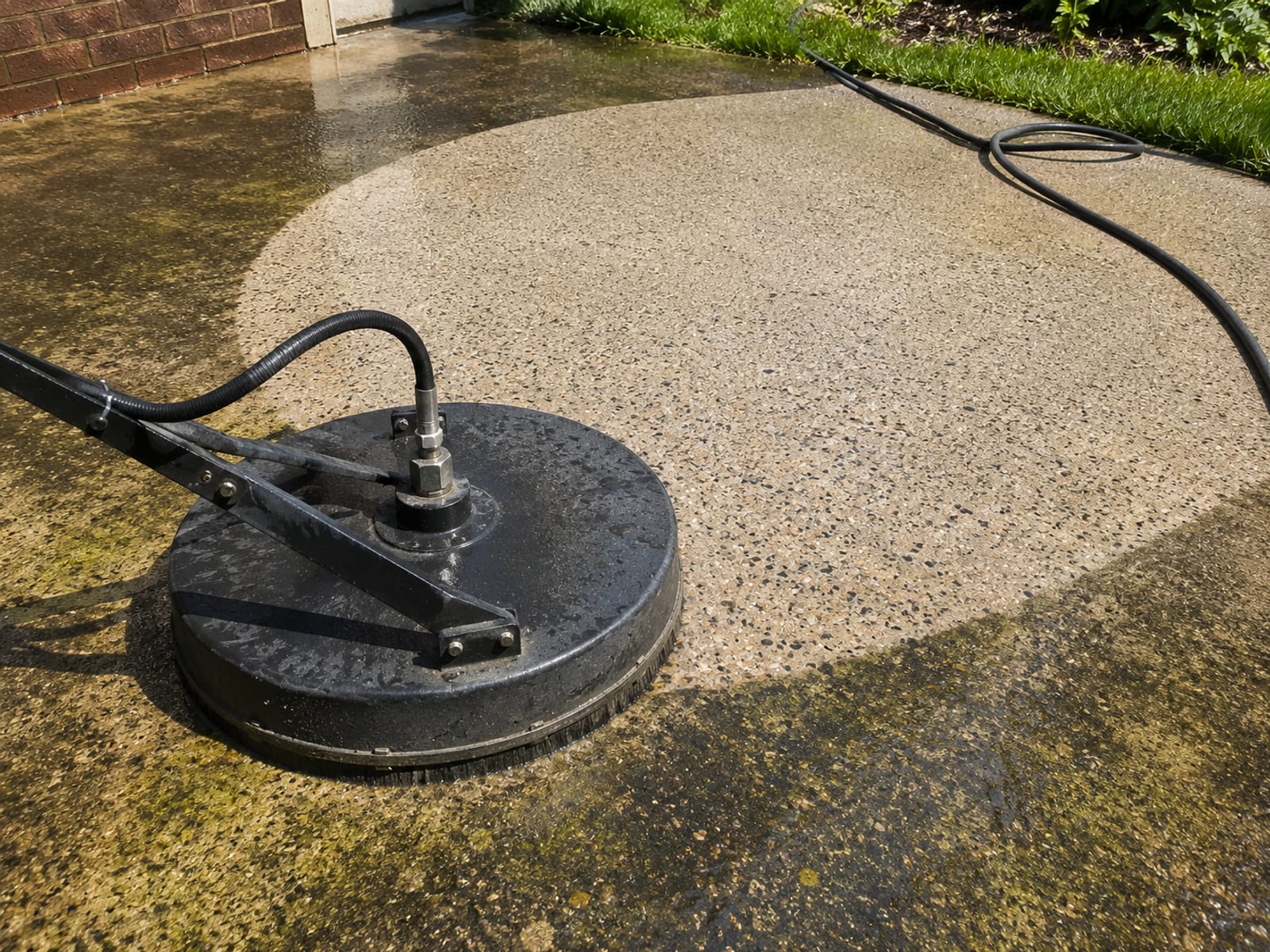
Wood decks get lower pressure and wider spray tips to avoid raising grain or driving water into soft board sections. We work with the grain direction and manage dwell time on any cleaning solution so it breaks down biological growth without sitting long enough to affect the wood itself. Composite decking gets cleaning chemistry and careful agitation rather than aggressive pressure. Concrete and paver patios can generally tolerate surface cleaning equipment that covers flat areas faster and more evenly than a standard wand tip.
Detail Work on Edges and Railings
Deck railings, post bases, stair stringers, and the perimeter where the deck meets the house all get hand attention. These areas collect the most grime and are where organic buildup tends to linger because they receive the least direct sunlight. We work into joints, balusters, and edge boards without forcing water behind siding or under thresholds.
Thorough Rinse and Final Check
A complete rinse removes cleaning solution residue and dislodged debris from the surface. We do a final walkthrough to check for missed spots, pooling water in low areas, and any areas where runoff needs to be directed away before we pack up. The goal is a surface that is completely clean, not one that has patches of cleaner residue drying into a white film.
The Right Method for Each Surface Type
Not every outdoor surface responds to cleaning the same way, and using the wrong pressure or the wrong approach on the wrong material causes damage that is expensive to fix. RBJ Exterior Solutions adjusts the method to the surface rather than applying the same setup to everything.
Pressure-Treated Wood Decks
Pressure-treated lumber is common in Baltimore County decks and responds well to lower-pressure cleaning with a wide tip and grain-conscious technique. Too much pressure raises the grain, splinters soft fibers, and can permanently roughen the board surface. We use controlled pressure and appropriate dwell time on cleaning solutions to lift algae and tannin staining without damaging the wood.
Composite Decking
Composite materials are denser than wood and less likely to be damaged by pressure alone, but they still need the right approach. Algae and organic buildup collect in the surface grain of composite boards and require cleaning chemistry and agitation to fully release. High pressure alone often smears rather than removes this type of buildup.
Concrete Patios
Poured concrete is the most tolerant surface for pressure washing and can handle surface cleaning equipment that covers flat areas efficiently. Oil staining, tire marks from patio vehicles, rust from metal furniture, and deep algae growth all respond well to surface cleaning paired with the right pre-treatment chemistry.
Pavers and Brick
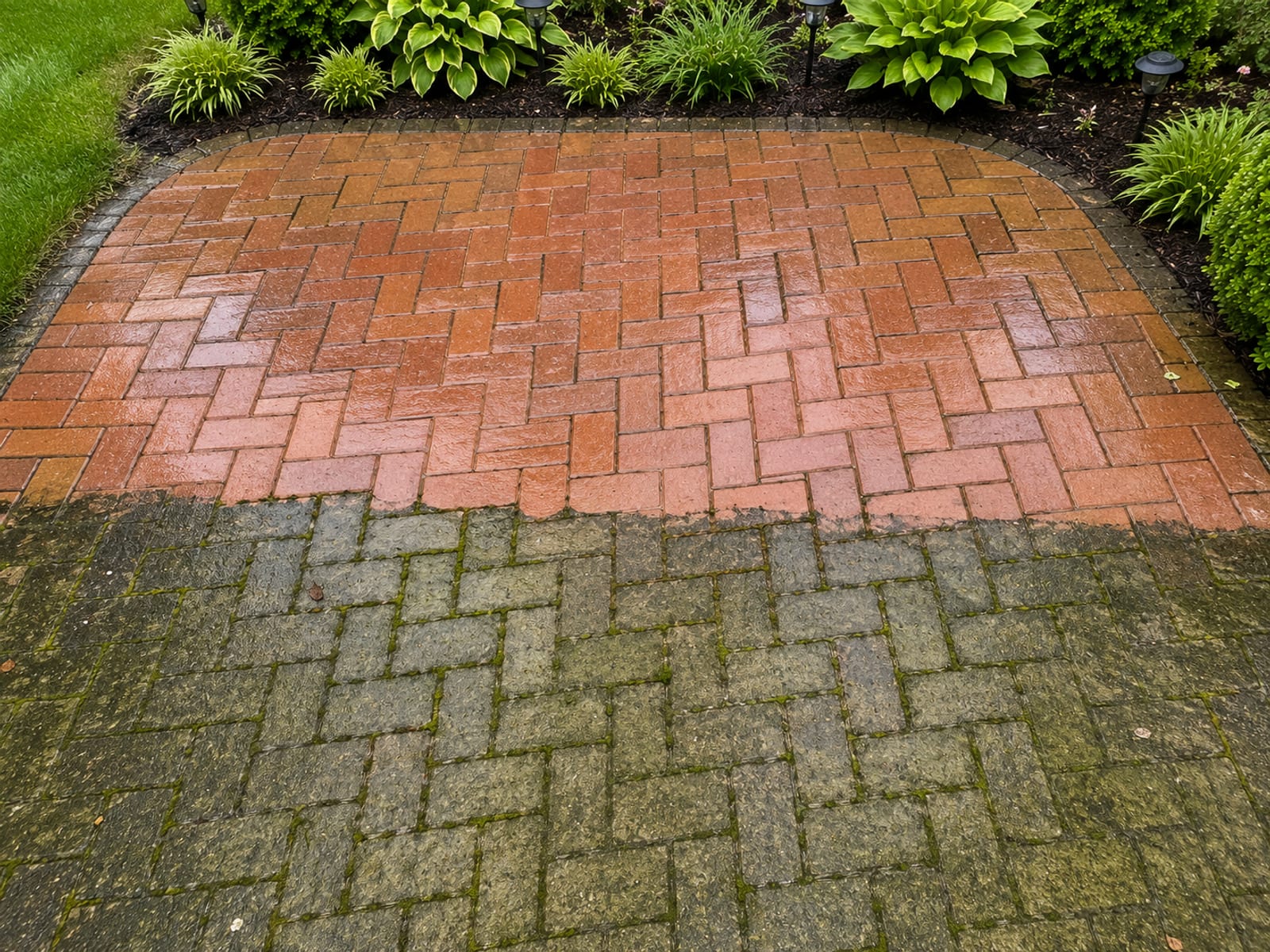
Pavers and brick need careful pressure control around joints where polymeric sand or regular sand sits. Too much pressure washes joint material out, which destabilizes the paver surface and leads to shifting and weed intrusion. We work around joint integrity while still fully cleaning the paver face and removing algae from low spots.
Natural Stone (Bluestone, Flagstone, Slate)
Natural stone is porous and can absorb cleaning chemistry if dwell time is not managed. Some stone types are also sensitive to acidic or alkaline cleaners that would be fine on concrete. We assess the stone type before applying any product and use lower pressure to avoid surface etching on softer stone varieties.
Deck Railings and Vertical Surfaces
Vinyl, aluminum, and wood railings collect oxidation, algae, and grime differently than horizontal deck surfaces. Vertical surfaces do not hold as much standing water but they do accumulate windblown pollen and environmental film. We clean railings as part of the deck service rather than leaving them while the decking boards are clean.
What You Can Expect After the Job Is Done
The most immediate result is visual. A deck or patio that had green algae film, dark tannin staining, or a general layer of pollen and grime looks dramatically different after a professional cleaning. The color of the wood or stone comes back, the surface texture is visible again, and the space reads as clean and intentional rather than neglected.
The safety improvement is real as well. Algae and mildew create a slick surface underfoot that gets worse when wet. Removing that biological growth restores grip to decking boards and patio surfaces, which matters most in the morning when dew is on everything or after rain. This is especially worth noting for households with children or older adults who use the outdoor space regularly.
On wood decks, a freshly cleaned surface is better prepared for any staining, sealing, or coating work you plan to do afterward. Professional cleaning removes the surface contamination and biological growth that prevent stains and sealers from bonding properly. If you are planning to reseal or refinish your deck, a professional cleaning is the required first step, not an optional one.
Composite decking surfaces typically look like new again after cleaning because the surface texture holds color well once the algae and pollen buildup is cleared. Pavers and stone patios look more uniform in color, with the joint lines and surface texture visible again instead of blurred under green or gray growth.
Why Homeowners in Baltimore County Choose RBJ Exterior Solutions
RBJ Exterior Solutions is a licensed and insured exterior cleaning company serving Baltimore, Towson, Dundalk, Catonsville, Pikesville, Owings Mills, Essex, Cockeysville, Parkville, Randallstown, Reisterstown, Perry Hall, Lutherville-Timonium, Hunt Valley, Middle River, White Marsh, Nottingham, Woodlawn, Rosedale, and Carney. Every part of how we operate is built around residential properties and the actual conditions homeowners deal with in this part of Maryland.
Two Cleaning Methods, Not One
We offer both pressure washing and soft wash cleaning, which means we can match the method to your surface rather than applying the same approach to everything. A wood deck and a concrete patio sitting ten feet apart need completely different treatment, and we know the difference.
Focused on This Region
Serving a defined 20-community area means faster scheduling and a technician who already understands local tree canopy, pollen seasons, shade patterns, and the specific mold and algae pressure that comes with Baltimore County's humidity. We are not driving two hours to your job.
Full Exterior Scope in One Visit
Deck and patio cleaning pairs naturally with house washing, fence washing, window cleaning, and gutter cleaning. If you want the entire exterior addressed before outdoor season, RBJ Exterior Solutions can cover all of it rather than requiring you to coordinate three separate vendors.
Plant and Runoff Awareness
We pre-wet landscaping before applying cleaning solutions, manage dwell time to protect plant root zones, and think about where wash water moves before we start. That process discipline protects your garden beds and keeps runoff from carrying contaminants toward storm drains.
Honest Surface Assessment
If a board is too soft, a paver joint is already compromised, or a section of stone has a sealed coating that needs a different approach, we say so before we start rather than after something goes wrong. The goal is a better result, not just a fast one.
Straightforward Scheduling
We are available Monday through Saturday, 8:30 AM to 4:30 PM. Scheduling, communication, and service delivery are built around how homeowners actually want to do business, without the complexity of commercial contractor processes.
Deck and Patio Cleaning: Questions Homeowners Ask
How often should I have my deck or patio professionally cleaned?
Will pressure washing damage my composite decking boards?
Can deck cleaning remove the black streaks and dark staining on my wood boards?
Do I need to seal or stain my deck after it is cleaned?
Is it safe to pressure wash around my pavers without washing out the joint sand?
Can you clean a deck and patio as part of a larger exterior cleaning visit?
What should I do to prepare before RBJ Exterior Solutions arrives?
Get Your Deck and Patio Ready for Outdoor Season
Call 203-751-0574 or email info@rbjexteriorsolutions.com to schedule your service or get your questions answered before you book.